

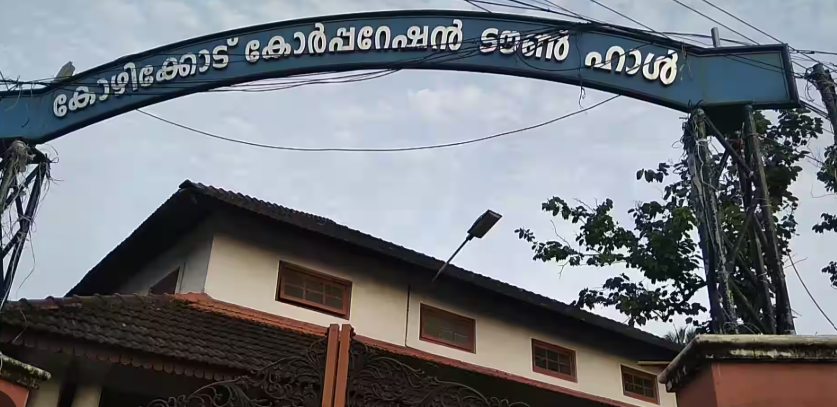
Located right in the heart of Kozhikode, close to SM Street and Mananchira Square, the Town Hall is one of the city’s most well‑known landmarks. Built in 1891 during the British era, it has been part of Kozhikode’s story for over a century, hosting meetings, events, and celebrations. Today, it works both as a historic building and as a popular event and wedding venue, making it a familiar and important part of everyday Calicut life.
A Glimpse into Its History
The Town Hall in Calicut came up during the late‑19th‑century phase of British expansion and urban planning in the Malabar region, when Kozhikode was emerging as an important port and commercial hub. Constructed to commemorate the queenship of Queen Victoria, the hall was originally envisioned as a public space for meetings, official functions, and civic discourse, reflecting the colonial emphasis on formal assembly‑cum‑symbolic architecture in Indian towns. Over the decades, it has undergone several renovations to adapt its interiors to modern needs, yet the essential colonial character of the structure has been carefully retained, making it a rare example of continuity in a rapidly changing cityscape.
Architectural Style and Exterior Charm
The Town Hall showcases a classic colonial‑cum‑vernacular architectural idiom, blending symmetry, proportion, and ornamentation in a way that feels both grand and rooted in local context. Its façade is dominated by a symmetrical layout, with lofty pillars, arched and semi‑circular windows, and an imposing entrance porch that opens to a central hall. The tiled roof, slightly angled to suit the tropical climate, merges Western masonry with traditional Kerala roofing techniques, giving the building a distinctive silhouette that stands out against the greenery of Mananchira Maidan. When viewed in the evening, with warm lights thrown against the façade and the surrounding lawns dotted with walkers and joggers, the Town Hall acquires a cinematic quality that makes it a favourite backdrop for photographs and short films.
The Role of the Hall as a Public Space
Beyond its aesthetic appeal, the Town Hall has played a crucial role as a civic and cultural nerve centre in Kozhikode. In the pre‑independence and early‑post‑independence years, it hosted public meetings, political lectures, and community forums, functioning much like a “town hall” in the European sense open to diverse voices and interests. Over time, as administrative functions moved to newer municipal and district complexes, the building transitioned into a multi‑use venue, accommodating everything from political rallies to art exhibitions and cultural festivals associated with the Mananchira precinct. Even today, when large events are announced in Kozhikode, the Town Hall often appears in the list of preferred venues, not only for its central location but also for the sense of occasion its heritage setting lends.
A Contemporary Banquet and Event Venue
In recent decades, the Town Hall has been adapted into a banquet and event space that can host weddings, receptions, corporate functions, and family celebrations. The main hall offers ample seating for several hundred guests, with high ceilings and large windows that allow natural light to flood in during daytime events. Many organisers also appreciate the availability of additional spaces such as a terrace area and an open lawn in the vicinity, which can be used for pre‑function gatherings, photography, or informal seating. Thanks to its location near Mananchira Square and SM Street, the venue is easy to reach by auto, taxi, or even on foot, making it a popular choice for both middle‑class and upscale events in the city.
Town Hall in the Cultural Fabric of Kozhikode
Beyond weddings and private functions, the Town Hall continues to appear in the city’s cultural calendar. It often serves as a supplementary venue or registration point during major festivals, exhibitions, and sports events centred around Mananchira Maidan, including marathons, art exhibitions, and youth festivals promoted by local event pages and municipal authorities. Photographers, social‑media‑savvy millennials, and content creators frequently use the building’s façade and staircases as a backdrop for candid shoots, wedding albums, and short reels, reinforcing its image as an “iconic façade of Calicut.” For long‑time residents, a glimpse of the Town Hall can trigger memories of school‑day excursions, college orientation days, or public meetings attended with parents, underlining its quiet role as a repository of personal and collective memory.
Why Town Hall Stays Relevant in Modern Kozhikode
In a city that is rapidly embracing shopping malls, multiplexes, and modern banquet halls, the Town Hall remains relevant precisely because it resists total erasure of the past. It offers a middle ground where colonial architecture, civic memory, and contemporary usage converge: a place where you can stand under 19th‑century pillars and still find neon‑lit wedding signs, or where a political poster from the 1950s might conceptually share space with today’s instagram‑centric event branding.